Championship Chatter – Bonus Thermo-Skyscrapers

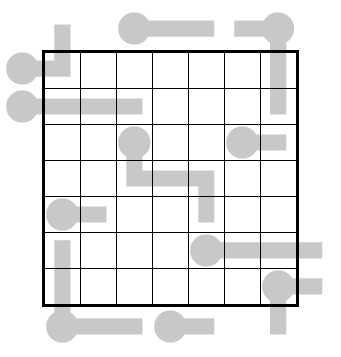
As promised, here was the original Thermo-Skyscrapers created for the USPC. I like the visual pattern and tightness of solving path much more, but it was simply too hard to use, particularly before the practice you now have from the one you saw on the USPC from yesterday’s post.

Skyscrapers by Thomas Snyder

PDF

or solve online (using our beta test of Penpa-Edit tools)

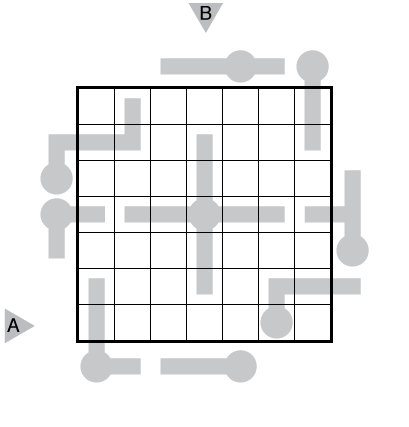
Theme: No given numbers, and full clue cell symmetry

Rules: Standard Skyscrapers rules. Also, as in Thermo-Sudoku, digits must be strictly increasing in all thermometer shapes from round bulb to flat end.

Answer String: Enter the seven digits inside the grid for the 7th row from left to right, followed by a comma, and then the seven digits inside the grid for the 4th column from top to bottom.

Solution: PDF

Site Update

If you are seeing this, you’re now connecting to gmpuzzles.com via our new webserver. Over the last month or so it became clear we had outgrown our original shared hosting service so we hope our new hosting is more stable and also faster for you. We’ve also changed some of our associated plug-ins to further improve site performance and memory usage. It is possible that some of these changes may affect some of our associated APIs like the Solve Button in unexpected ways, so please comment on any errors or irregularities you encounter over the next week in case there is something we’ve missed in our transition process.

ETA: It actually seems some readers are crawling both old and new servers still. The Friday Bonus Skyscrapers puzzle will not be viewable if it is trying to find that file on the old server, so in that case you have to view the page directly if RSS is wrong, refresh the page or clear your browser cache, or wait a few days for this to update on its own.

Thanks for your patience — and happy solving!

Championship Chatter – High Rising Temperatures

The hardest puzzle I wrote for the USPC was originally intended to be presented as a subtle “surprise”. The rules would have covered what thermometer shapes do (strictly increase from bulb to flat end), but would not have been explicit that those shapes could reach outside the grid. So finding a grid with no external numbers but with many external shapes would have been a manageable but perhaps unexpected surprise. But it was decided to just be explicit here, and with some other authors in the last few months having used the same external clue ideas with skyscrapers (including myself here with an Even/Odd Skyscrapers after I knew the fate of this puzzle) it’s not clear if this would have been unexpected anyway.

I thought this was an interesting extension of some inequality skyscraper concepts I’ve seen elsewhere. My first attempt at this puzzle type was judged very elegant and far too hard. My second attempt kept one of these two traits and made it onto the test. Like the TomTom, this variation seemed to get pretty good reviews, but I do know some solvers who fell into the trap of thinking an outside number blocked that number from appearing inside the grid.

Skyscrapers by Thomas Snyder

PDF

or solve online (using our beta test of Penpa-Edit tools)

Theme: No given numbers, and full clue cell symmetry

Rules: Standard Skyscrapers rules. Also, as in Thermo-Sudoku, digits must be strictly increasing in all thermometer shapes from round bulb to flat end.

Answer String: For the USPC, the answer string was the internal cells in the 4th row and 7th row. For this week, you can just hit the solved button on an honor system if you think you’ve solved it.

Solution: PDF

Championship Chatter – That New Tom/Tom Craze

While I still want to find a good name for this variation of TomTom (Tight Fit TomTom matches the genesis story well but is probably not the best name for longevity), it was a style idea that strongly encouraged me to write for the USPC this year as it seemed a great place to debut it.

The idea actually came from Craig Kasper during a discussion of puzzle styles and possible variations. Craig didn’t think he could do it justice, but he offered it to me and I knew instantly it was a great concept to save for the future — with the USPC as the obvious first destination if it could work. I wrote two Tom/Tom puzzles (also probably not the best name — maybe in the comments people can recommend others?). The first was an easy one (10 pointer?) that became the example. The second was a tougher puzzle that has been called undervalued for 20 points by most people commenting on it. Perhaps the break-ins were not as easy to find?

The biggest struggle with the style was how to format it well; you’ll find that both of these puzzles use slashes in cells that would not normally contain the clue digit to leave more space in the fractional cells for writing numbers. Palmer’s pre-USPC example uses shaded cells and this might be a more productive route going forward. I have plans to make a bunch of TomTom variety books/puzzle packs focused on different math concepts and will probably make one around this variation when I get some larger tasks off my plate. Removing some of the extra trickiness of these samples and having simpler fractional values and even fractional clue targets should make this a good extension of TomTom puzzles for education purposes. I can even turn single cell cages into non-trivial entries!

I hope you enjoyed this variation as much as I enjoyed making it work.

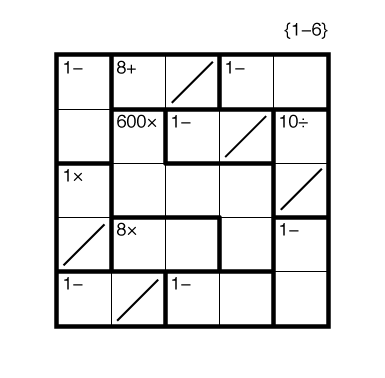
TomTom by Thomas Snyder

PDF

or solve online (using our beta test of Penpa-Edit tools; use tab to alternate between “big” sudoku and “small” number entry modes.)

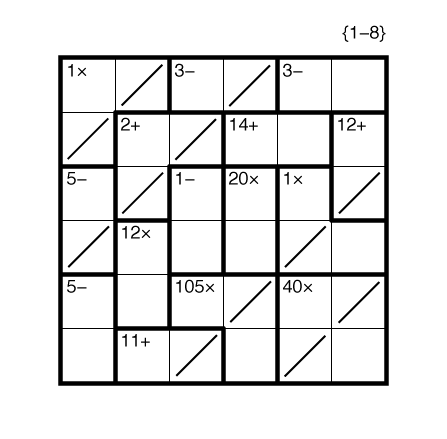
TomTom by Thomas Snyder

PDF

or solve online (using our beta test of Penpa-Edit tools; use tab to alternate between “big” sudoku and “small” number entry modes.)

Theme: Cage geometries, and the logic of the solve and new fraction rules primarily

Rules: Variation of standard TomTom rules. The indicated ranges are larger than N x N (1-6 and 1-8 respectively), and some cells containing slashes require two digits to be placed. These cells should be treated as fractional values (top value over bottom value) for the purposes of solving the puzzle.

Answer String: For the USPC, the answer string was the 5th row and 5th column of the larger puzzle. For this week, you can just hit the solved button on an honor system if you think you’ve solved it.

Solution 1: PDF
Solution 2: PDF

Championship Chatter – How Many Roads …?

I received a lot of “pre-criticism” about having made a Counting Puzzle for the USPC. I have been rather outstated as a solver in not liking these puzzles because of the difficulty of confirming one’s answer — particularly in the old -5 point days for a mistake that would frequently cost me for even attempting and getting close to the right answer. And I often don’t get the choice to skip it when I’m close to finishing the test.

But that doesn’t mean I’ve never been called on to write Counting Puzzles. I wrote a GAMES article/Puzzlecraft chapter on the topic. And I gave it another attempt on this USPC. Call it an experiment to see if I could make anything my audience would accept as a good puzzle.

My first concept was to make a heavy path puzzle with lots of forced segments due to arrows, but not a single solution to give it a “counting” aspect. While I figured good solvers would be able to get to a “trivial” state to count a handful of total paths, all of my initial designs ended up feeling more like a broken path puzzle than a good counting puzzle so a changed goals slightly. I wondered: can I make a few very simple counting challenges work together with some simple math to be a fair challenge. Basically, something where good observation could reduce the problem into something much more tractable. And if this is testing both observation and problem solving skills in an unfamiliar setting, all the better.

Even with the “simple” format below that even had the surprise of very basic multiplication built in, the successful answer rate was quite low compared to my own expectations. And at least one solver has complained about getting 99.991% of the correct answer and getting zero credit. In my evaluation, with three small counting puzzles and a meta puzzle of building the math equation, that answer is 75% correct in the same way some of the answers in the 52k range were. All from counting one of the component puzzles one lower than expected.

So, did you think this was an appropriate USPC challenge? Did this soften or strengthen opinions against counting puzzles? Are counting puzzles still the brussel sprouts of the USPC buffet? I’ve only heard positives from people that actually got the puzzle correct so I do have to think score results often bias counting puzzle reviews (my strongly negative reviews have certainly followed my average score of -5 on these puzzles over the years).
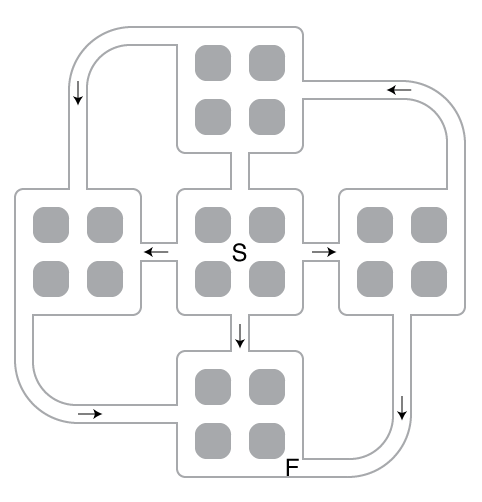
Pathfinder by Thomas Snyder

PDF

Theme: Symmetry, mainly

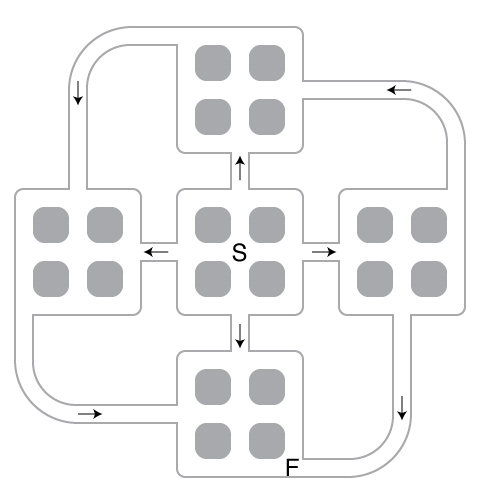
Rules: Count the number of different paths from Start (S) to Finish (F). You cannot use an intersection or a path segment more than once. Path segments with arrows can only be used in the indicated direction.

Answer String: For the USPC, the answer string was the number of paths. For this week, you can just hit the solved button on an honor system if you think you’ve solved it.

Solution: PDF

And if you want an extra challenge, solve this bonus puzzle where an arrow has been removed. It’s one step up from the original puzzle but should be just as simple to break into constituent parts if you’ve mastered the first.

Ask Dr. Sudoku – Championship Chatter

Last Saturday finished another 6 week cycle of offerings from Grandmaster Puzzles. It also finished a rather busy 6 weeks of puzzle construction and testing, including three different puzzle championship rounds. Two of these have now been hosted (the US Sudoku Qualifying Test/Grand Prix Contest, and the US Puzzle Championship) and one will be a future surprise. This gives me reason to think a pause for some reflection and discussion about some of these puzzles would be a valuable use of the “gap” time before our next spurt of new puzzles and possibly new genres begins. [It also gives me a chance to hopefully address some server issues.]

The USPC is one of the few championships that follows the World Puzzle Federation’s model of puzzle balance including observational puzzles, word manipulation puzzles, and often some “trick” puzzles alongside a mix of classic constraint satisfaction types and variants. I figured — given existing contributors — that I would be most called upon to make some innovative word and observational puzzles alongside some original (read: previously unseen) variants that would hold new surprises for all solvers. The first puzzle I wanted to highlight is one that is meant to be recognizable and friendly to even the casual solver: the USPC Word Search.

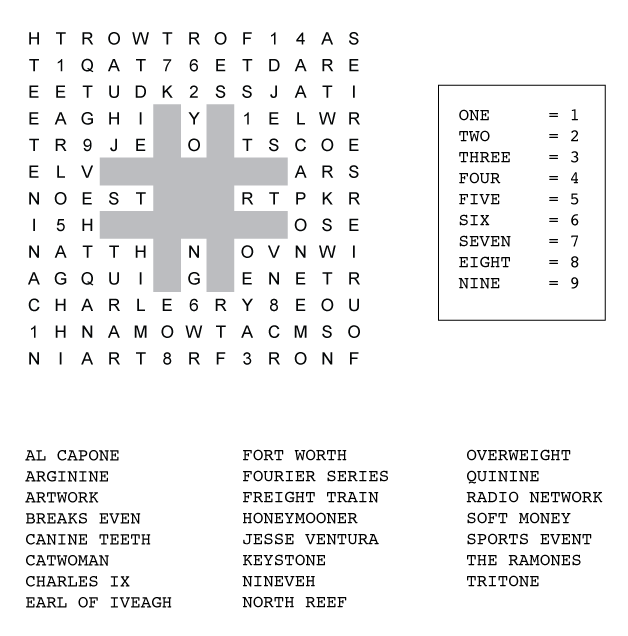
I had a few ideas in mind this year for creating an interesting word search, and settled on a variety rebus gimmick where entries may or may not contain a shortened set of characters in a single square. Having previously used digit word phrases for a Sudoku Masterpieces puzzle (Some Err1ous Spelling!) and having much of that research on hand, I took my time getting a good interlinked set of “Digi2rds” together for the USPC puzzle. The missing middle shaped like an octothorpe was another goal I had in mind to give the puzzle some character. I also laid some traps around the middle for solvers trying to intuit words too soon. While many solvers will turn their noses up at a word search, I still see great value in having such puzzle styles represented on a puzzle championship. I hope I managed to give an intriguing challenge with the puzzle below.

Word Search by Thomas Snyder

PDF

or solve online (using our beta test of Penpa-Edit tools; use tab mode to shift between line drawing, letter/number entry, and shading modes)

Theme: Hidden Numbers

Rules: Standard Word Search rules. Also, a digit may be used in place of its letters when spelled out. For example, “DIGIT WORD SEARCH” might appear in the grid as “DIGI2RDSEARCH”. 25 characters are missing from the grid and must be identified to complete the puzzle.

Answer String: For the USPC, the answer string was the 25 missing characters in order. For this week, you can just hit the solved button on an honor system if you think you’ve solved it.

Solution: PDF

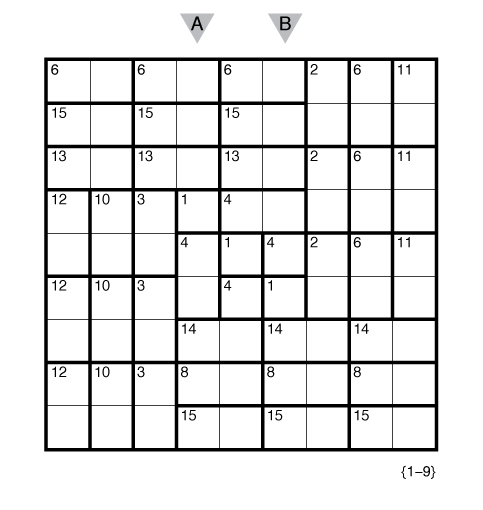
Dr. Sudoku Prescribes #112 – TomTom

TomTom by Thomas Snyder

PDF

or solve online (using our beta test of Penpa-Edit tools)

Theme: Triple Play

Rules: Standard TomTom rules, using digits from 1-9.

Answer String: Enter the 4th column from top to bottom, followed by a comma, followed by the 6th column from top to bottom.

Time Standards (highlight to view): Grandmaster = 12:30, Master = 25:00, Expert = 50:00

Solution: PDF

Note: Follow this link for other classic TomTom. If you are new to this puzzle type, here are our easiest TomTom to get started on.

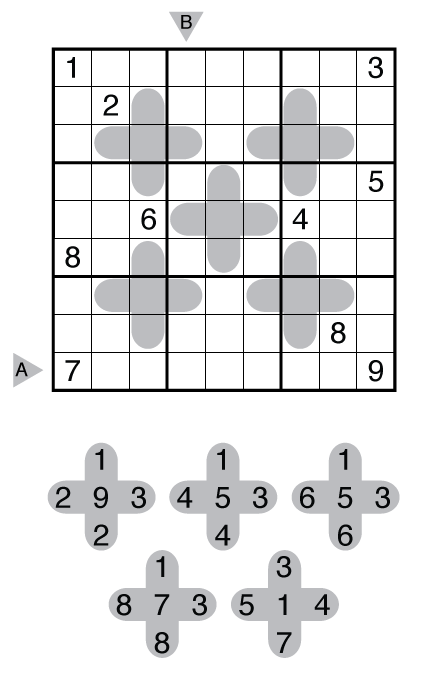
Dr. Sudoku Prescribes #111 – Shape Sudoku

Sudoku by Thomas Snyder

PDF

or solve online (using our beta test of Penpa-Edit tools; use tab to alternate between Sudoku number entry mode and a shading mode to manage the shape inventory.)

This is a “Franken-Friday” puzzle variation.

Theme: Plus Signs

Rules: Standard Shape Sudoku rules.

Answer String: Enter the 9th row from left to right, followed by a comma, followed by the 4th column from top to bottom.

Time Standards (highlight to view): Grandmaster = 7:00, Master = 15:00, Expert = 30:00

Solution: PDF

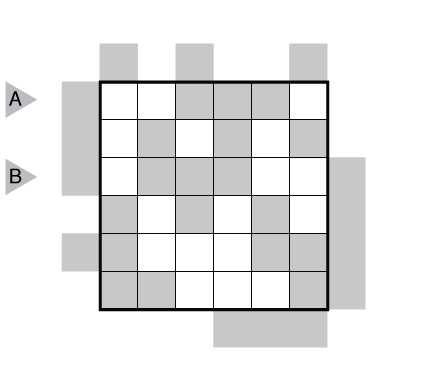
Dr. Sudoku Prescribes #110 – Skyscrapers (Even/Odd)

Skyscrapers by Thomas Snyder

PDF

or solve online (using our beta test of Penpa-Edit tools)

This is a “Franken-Friday” puzzle variation.

Theme: No givens (this variation was inspired in part by the Even/Odd round at the 19th WPC by Lukasz Bozykowski.)

Rules: Standard Skyscrapers rules. All even digits (and only even digits) have been shaded gray. Note: this means that all unshaded digits, including unshaded outside digits, are odd.

Answer String: Enter the 1st row from left to right, followed by a comma, followed by the 3rd row from left to right.

Time Standards (highlight to view): Grandmaster = 2:45, Master = 4:00, Expert = 8:00

Solution: PDF

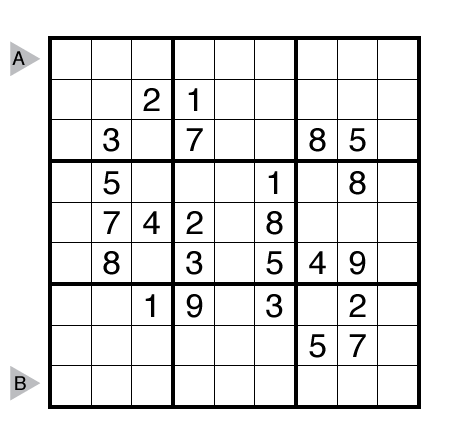
Dr. Sudoku Prescribes #109 – Sudoku

Sudoku by Thomas Snyder

PDF

or solve online (using our beta test of Penpa-Edit tools)

Theme: 6/6

Rules: Standard Sudoku rules.

Answer String: Enter the 1st row from left to right, followed by a comma, followed by the 9th row from left to right.

Time Standards (highlight to view): Grandmaster = 2:30, Master = 3:45, Expert = 7:30

Solution: PDF

Author’s Note (spoilers): While there are no given sixes in the grid, did you notice that it is very easy to put two sixes into two specific spots?. Follow this link for other classic Sudoku. If you are new to this puzzle type, here are our easiest Sudoku to get started on. More classic Sudoku puzzles can be found in The Art of Sudoku, The Art of Sudoku 2 and in our beginner-friendly collection Intro to GMPuzzles by Serkan Yürekli.