Battleships (Minesweeper) by Thomas Snyder
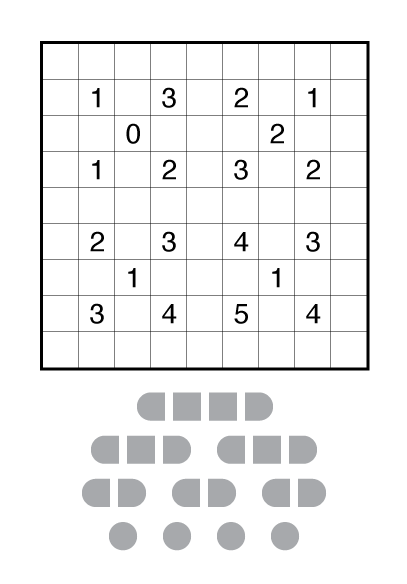
Battleships by Thomas Snyder

PDF

or solve online (using our beta test of Penpa-Edit tools; use tab to alternate between ship placement and shading modes. In ship placement mode, right click gives sea, left click gives circle/square, left click and drag for rounded ships.)

Theme: Xs Mark the Spots

Author/Opus: This is the 324th puzzle from Thomas Snyder, aka Dr. Sudoku.

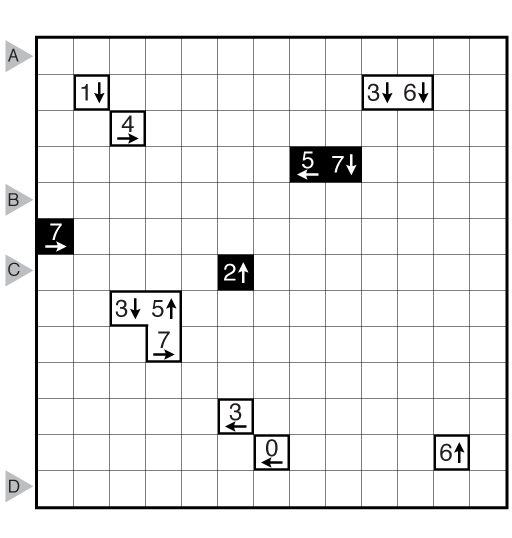
Rules: Variation of standard Battleships rules. Instead of exterior clues, clues inside the grid indicate the number of adjacent squares, including diagonally adjacent squares, containing ship segments. Ships do not sit on cells with numbers.

Answer String: For each row from top to bottom, enter the number of the first column from the left where a ship segment appears (enter just the last digit for any two-digit number). If the row is empty, enter 0. Enter these numbers as a single string with no separators.

Time Standards (highlight to view): Grandmaster = 3:15, Master = 5:00, Expert = 10:00

Solution: PDF

Note: Follow this link for more variations on Battleships and this link for classic Battleships. More Battleships puzzles can be found in Battleships and Variations, in The Art of Puzzles, and in our beginner-friendly collection Intro to GMPuzzles by Serkan Yürekli.
Castle Wall by Murat Can Tonta

Castle Wall by Murat Can Tonta

PDF

or solve online (using our beta test of Penpa-Edit tools in linex mode where left click+drag draws lines and right click marks X’s)

Theme: Crosshairs

Author/Opus: This is the 116th puzzle from our contributing puzzlemaster Murat Can Tonta.

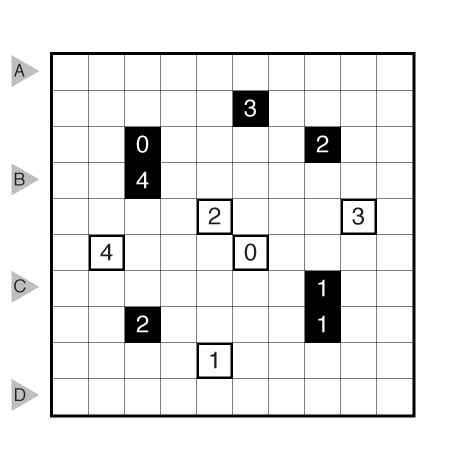
Rules: Standard Castle Wall rules.

Answer String: Enter the length in cells of the horizontal loop segments from left to right in the marked rows, starting at the top. If the loop only has vertical segments in the marked row, enter 0. Separate each row’s entry with a comma.

Time Standards (highlight to view): Grandmaster = 5:15, Master = 8:30, Expert = 17:00

Solution: PDF

Note: Follow this link for more Castle Wall puzzles. If you are new to this puzzle type, here are our easiest Castle Wall puzzles to get started on. More Castle Wall puzzles can be found in our beginner-friendly collection Intro to GMPuzzles as well as the larger collection Castle Wall, both by Serkan Yürekli.

Castle Wall (Total False) by Murat Can Tonta

Castle Wall by Murat Can Tonta

PDF

or solve online (using our beta test of Penpa-Edit tools in linex mode where left click+drag draws lines and right click marks X’s)

Theme: Clue Symmetry and Logic

Author/Opus: This is the 115th puzzle from our contributing puzzlemaster Murat Can Tonta.

Rules: Variation of Castle Wall. Clue cell colors have the usual meaning. However, the numbers cannot be correct clues for any of the four directions (left, right, up, down) around the cell.

Answer String: Enter the length in cells of the horizontal loop segments from left to right in the marked rows, starting at the top. If the loop only has vertical segments in the marked row, enter 0. Separate each row’s entry with a comma.

Time Standards (highlight to view): Grandmaster = 5:00, Master = 7:45, Expert = 15:30

Solution: PDF

Note: Follow this link for more Castle Wall puzzles. If you are new to this puzzle type, here are our easiest Castle Wall puzzles to get started on. More Castle Wall puzzles can be found in our beginner-friendly collection Intro to GMPuzzles as well as the larger collection Castle Wall, both by Serkan Yürekli.

Thermo-Sudoku by Ashish Kumar

Thermo-Sudoku by Ashish Kumar

PDF

or solve online (using our beta test of Penpa-Edit tools)

Theme: Clueless

Author/Opus: This is the 6th puzzle from guest contributor Ashish Kumar.

Rules: Standard Thermo-Sudoku rules.

Answer String: Enter the 5th row from left to right, followed by a comma, followed by the 7th row from left to right.

Time Standards (highlight to view): Grandmaster = 7:00, Master = 13:30, Expert = 27:00

Solution: PDF

Note: Follow this link for more Thermo-Sudoku puzzles. If you are new to this puzzle type, here are our easiest Thermo-Sudoku to get started on. More Thermo-Sudoku puzzles can be found in The Art of Sudoku 2.

Consecutive Pairs Sudoku by Murat Can Tonta

Consecutive Pairs Sudoku by Murat Can Tonta

PDF

or solve online (using our beta test of Penpa-Edit tools)

Theme: Clue Symmetry and Logic

Author/Opus: This is the 113th puzzle from our contributing puzzlemaster Murat Can Tonta.

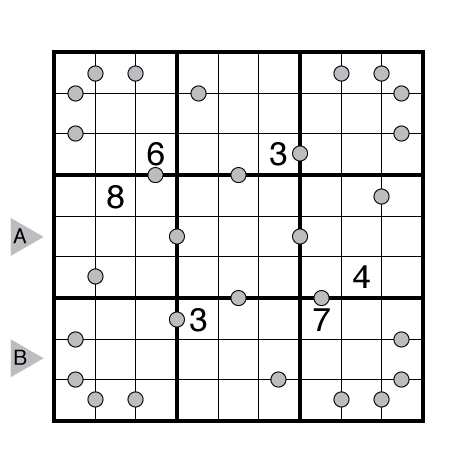
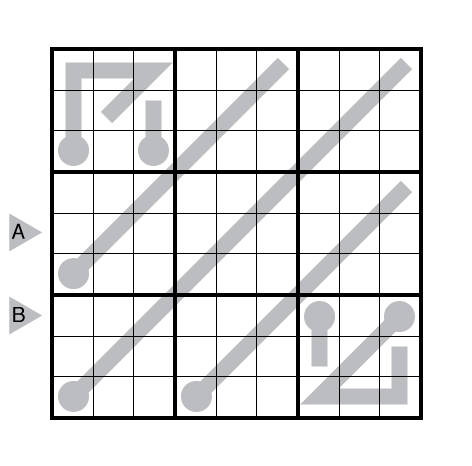
Rules: Standard Consecutive Pairs Sudoku rules. (If a gray circle is given between two adjacent cells, then the two numbers in those cells must be consecutive. Note not all gray circles are given; adjacent cells without a circle may contain either consecutive numbers or nonconsecutive numbers.)

Answer String: Enter the 5th row from left to right, followed by a comma, followed by the 8th row from left to right.

Time Standards (highlight to view): Grandmaster = 5:00, Master = 7:30, Expert = 15:00

Solution: PDF; a solution video is also available here.

Note: Follow this link for Consecutive Pairs Sudoku puzzles on this website. If you are new to this puzzle type, here are our easiest Consecutive Pairs Sudoku to get started on. More Consecutive Pairs Sudoku puzzles can be found in The Art of Sudoku 2.

Star Battle by William Hu

Star Battle by William Hu

PDF

or solve online (using our beta test of Penpa-Edit tools)

Theme: Brackets

Author/Opus: This is the 4th puzzle from guest contributor William Hu.

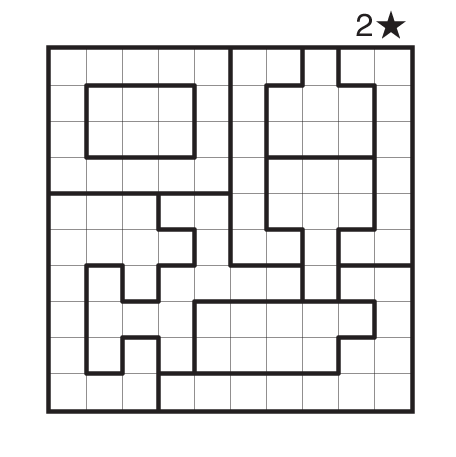
Rules: Standard Star Battle rules. Two stars per row, column, and region.

Answer String: For each row from top to bottom, enter the number of the first column from the left where a star appears. Enter these numbers as a single string with no separators.

Time Standards (highlight to view): Grandmaster = 3:15, Master = 7:00, Expert = 14:00

Solution: PDF

Note: Follow this link for other classic Star Battles. If you are new to this puzzle type, here are our easiest Star Battles to get started on. More Star Battle puzzles can be found in The Art of Puzzles and in our beginner-friendly collection Intro to GMPuzzles by Serkan Yürekli.
Double Kakuro by İlay Zehra Şenay

Kakuro by İlay Zehra Şenay

PDF

or solve online (using our beta test of Penpa-Edit tools; note that the dotted circles are just for answer entry and are where the number should be placed in the 2×2 cell. An alternate option with centralized digit entry is here.)

Theme: 4×4

Author/Opus: This is the 3rd puzzle from guest contributor İlay Zehra Şenay.

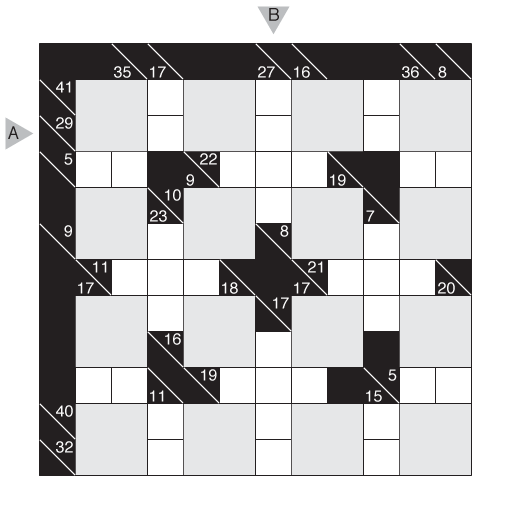
Rules: Variation of Kakuro. The gray (2×2) cells are to be filled by a single digit which sits in multiple rows and columns. No digits can repeat within an entry, regardless of if it is in a small or large cell.

Answer String: Enter the values in each white/gray cell in the marked row from left to right and then the marked column from top to bottom, separating the groups with a comma.

Time Standards (highlight to view): Grandmaster = 4:15, Master = 6:15, Expert = 12:30

Solution: PDF

Note: Follow this link for other Kakuro puzzles. More Kakuro puzzles can be found in Kakuro and Variations by Serkan Yürekli. Kakuro will also eventually be featured in The Art of Puzzles 2.

Fillomino by Murat Can Tonta

Fillomino by Murat Can Tonta

PDF

or solve online (using our beta test of Penpa-Edit tools; use tab to alternate between a composite mode for line/edge drawing and a number entry mode.)

Theme: Clue Symmetry and Logic

Author/Opus: This is the 110th puzzle from our contributing puzzlemaster Murat Can Tonta.

Rules: Standard Fillomino rules.

Answer String: For each cell in the marked rows/columns, enter the area of the polyomino it belongs to. Enter just the last digit for any two-digit number. Start with the 6th row, followed by a comma, followed by the 8th row.

Time Standards (highlight to view): Grandmaster = 4:45, Master = 7:30, Expert = 15:00

Solution: PDF

Note: Follow this link for other classic Fillomino and this link for more variations on Fillomino puzzles. If you are new to this puzzle type, here are our easiest Fillomino puzzles to get started on. More Fillomino puzzles can be found in The Art of Puzzles, in Fill o’ Fillomino and Fill o’ Fillomino 2 by Grant Fikes, and in our beginner-friendly book Logic Puzzles 101.

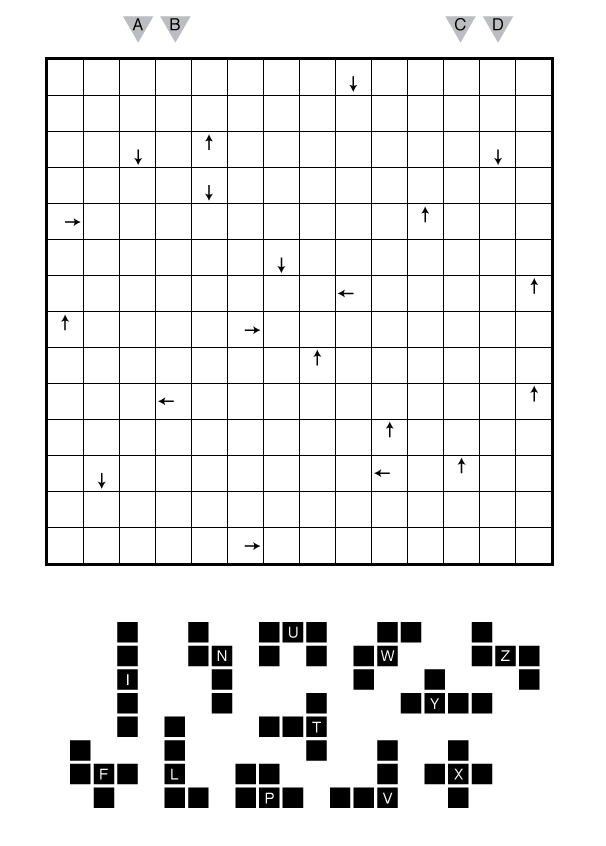
Pentopia by Prasanna Seshadri

Pentopia by Prasanna Seshadri

(view directly for a larger image)

PDF

or solve online (using our beta test of Penpa-Edit tools).

Theme: One-Way Arrows

Author/Opus: This is the 170th puzzle from our contributing puzzlemaster Prasanna Seshadri.

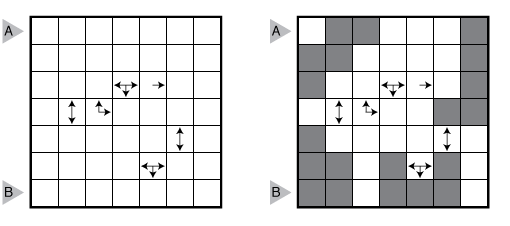
Rules: Standard Pentopia rules: Place some of the given pentominoes in the grid so that no pentominoes are in adjacent cells that share an edge or corner. Pentominoes cannot repeat in the grid; rotations and reflections of a pentomino are considered the same shape. The arrow clues indicate all the directions (up, down, left, and right) where the nearest pentominoes are located when looking from that square. (Arrow clues cannot contain pentomino shapes.) Also, see this example:

Pentopia by Prasanna Seshadri

Answer String: Enter the length in cells of each of the shaded pentomino segments from top to bottom for the marked columns, starting at the left. Separate each column’s entry from the next with a comma.

Time Standards (highlight to view): Grandmaster = 6:00, Master = 10:45, Expert = 21:30

Solution: PDF; a solution video is also available here.

Note: Follow this link for more Pentopia puzzles and this link for other puzzles involving Pentominoes.

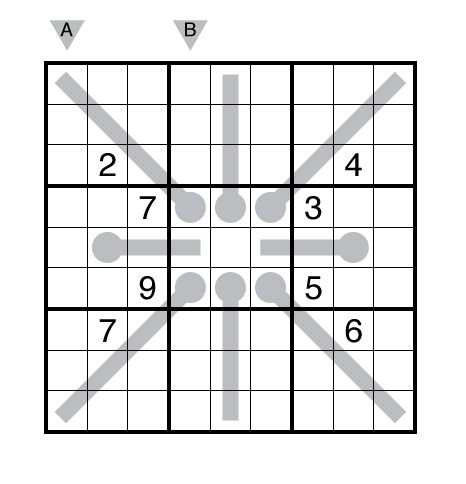
Thermo-Sudoku by Kishore Kumar Sridharan

Thermo-Sudoku by Kishore Kumar Sridharan

PDF

or solve online (using our beta test of Penpa-Edit tools)

Theme: Sun

Author/Opus: This is the 2nd puzzle from guest contributor Kishore Kumar Sridharan.

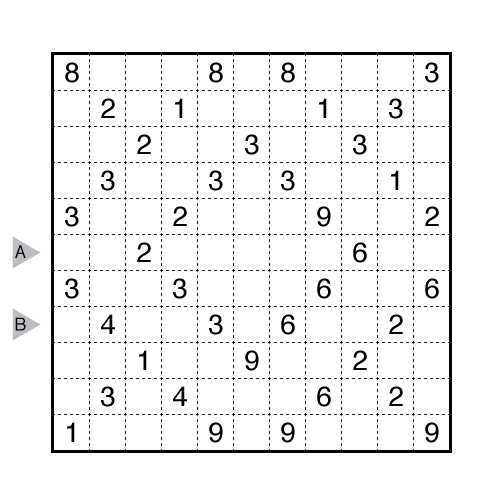
Rules: Standard Thermo-Sudoku rules.

Answer String: Enter the 1st column from top to bottom, followed by a comma, followed by the 4th column from top to bottom.

Time Standards (highlight to view): Grandmaster = 5:00, Master = 7:30, Expert = 15:00

Solution: PDF

Note: Follow this link for more Thermo-Sudoku puzzles. If you are new to this puzzle type, here are our easiest Thermo-Sudoku to get started on. More Thermo-Sudoku puzzles can be found in The Art of Sudoku 2.